

인천국제공항이라는 끊임없는 이동의 흐름 속에서, 이 프로젝트는 ‘한국적 곡선’을 움직임과 관계로 이루어진 공간의 언어로 재해석한다.
stof는 절제된 곡선을 통해 동선을 부드럽게 이끌고 공간의 리듬을 조율하며, 전통과 현대, 문화와 사람, 머묾과 이동이 자연스럽게 교차하는 지점을 만들어낸다.
Located within Incheon International Airport, this project reinterprets the idea of the “Korean curve” as a spatial language shaped by movement and relationship.
Responding to the constant flow of travelers, stof introduces soft, restrained curves that guide circulation, adjust rhythm, and connect tradition with contemporary experience—transforming the space into a quiet point of intersection between culture, people, and time.
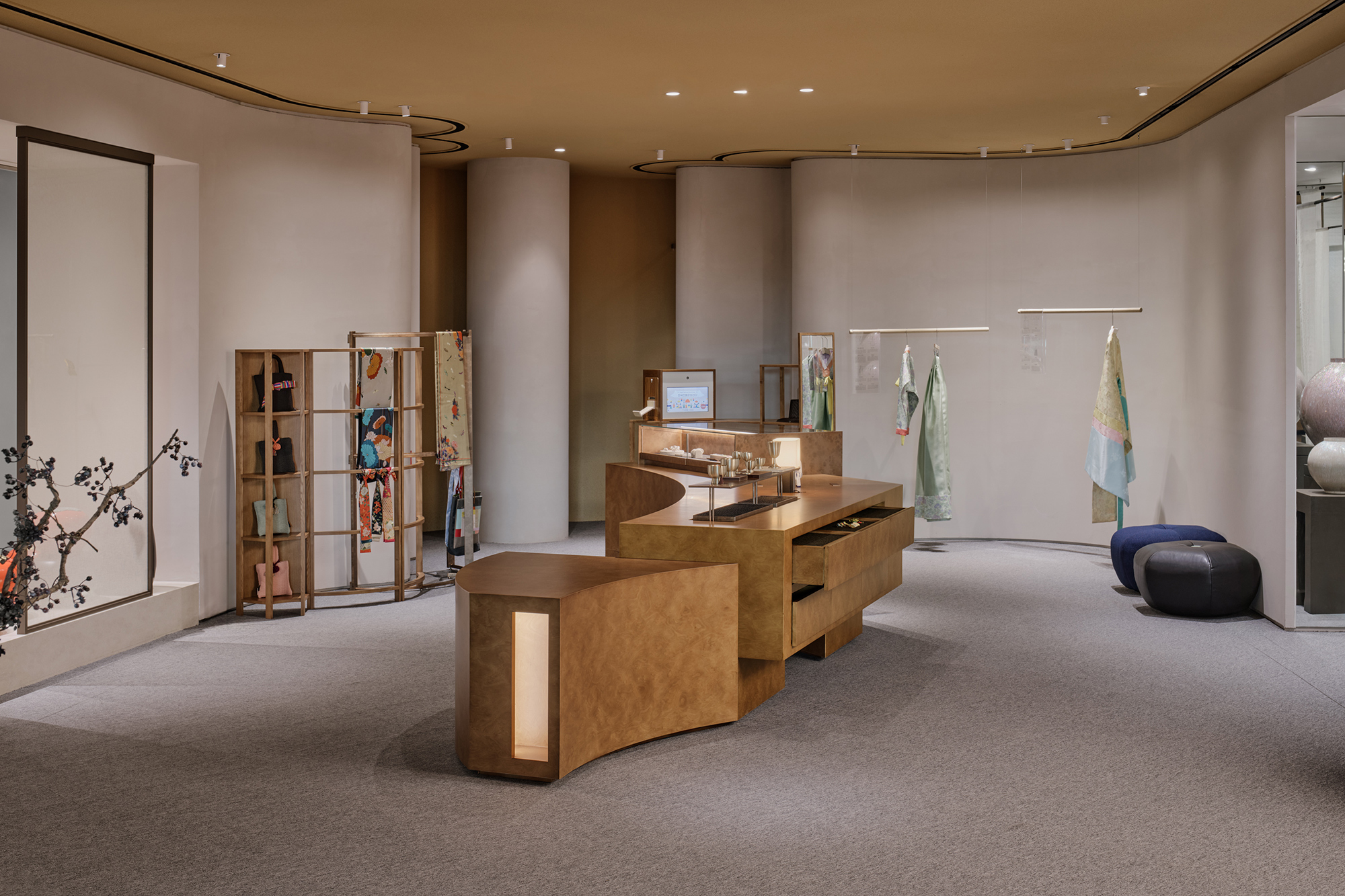
공항은 서로 다른 언어와 국적의 사람들이 끝없이 교차하는 거대한 접점이다. 각자의 목적지를 향해 흘러가는 공항의 시간은, 수많은 시선과 동선이 스치며 만들어내는 흐름 속에서 보이지 않는 선들을 반복적으로 그려낸다. 디자인 스튜디오 스토프(stof)는 이러한 공항이라는 매개체가 지닌 ‘속도와 관계의 곡선’을 공간의 본질로 끌어와 가장 한국적인 곡선을 구현하고자 했다.
인천국제공항 내에 위치한 한국전통문화센터는 다양한 체험과 전시를 운영하며, 이를 통해 국내외 여객에게 국가유산을 올바르게 전달하는 역할을 한다. 한국인에게는 오래된 문화의 결을 되짚는 장소로, 외국인에게는 타국의 문화가 다층적으로 드러나는 창으로 기능하며, 전통과 현대, 낯섦과 익숙함, 여행자와 문화 사이의 연결을 만들어내는 여정의 시작점이 되고 있다.
The airport is a vast point of convergence where people of different languages and nationalities endlessly cross paths. Time in an airport flows toward countless destinations, drawing invisible lines shaped by the fleeting intersections of gazes and movements. Design studio stof sought to bring these inherent qualities—the airport’s “curves of speed and relation”—into the essence of the space, interpreting them through the lens of the most Korean form of the curve.
Situated inside Incheon International Airport, the Korea Traditional Culture Center operates a variety of cultural programs and exhibitions, serving as a place where travelers encounter Korea’s heritage in an accessible and meaningful way. For Koreans, it becomes a space that revisits the texture of long-standing traditions; for international visitors, it offers a layered glimpse into an unfamiliar culture. It stands as the starting point of a journey where tradition and modernity, the unfamiliar and the familiar, and travelers and culture naturally intersect.
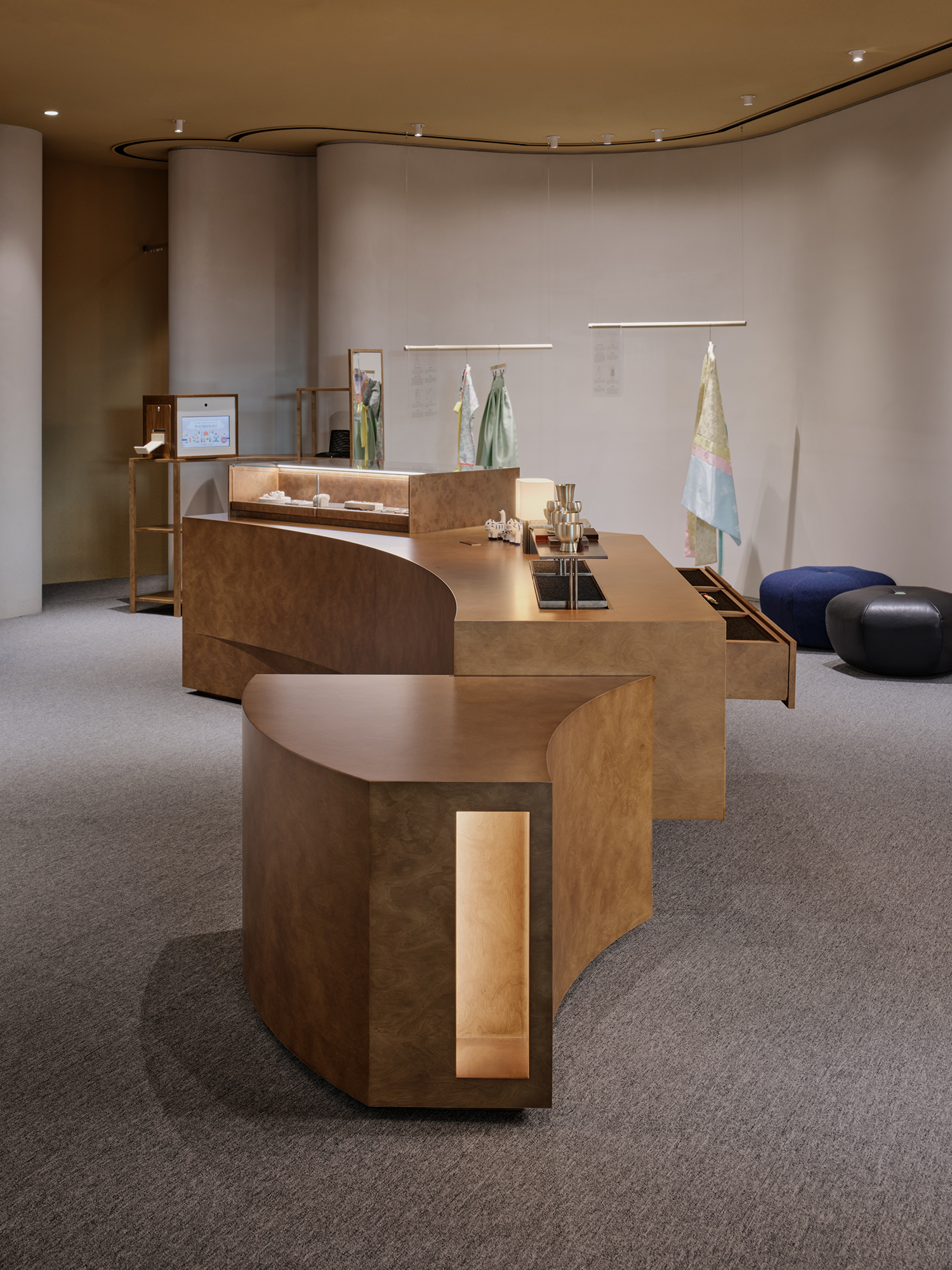
스토프는 이러한 맥락 위에 ‘한국적인 곡선의 해석’을 구조적 언어로 재해석했다. 한국의 곡선은 완벽함을 좇는 기계적 선과 달리, 관계와 균형이 만들어내는 절제된 흐름에 가깝다. 달 항아리가 품은 넉넉한 둘레, 기와가 하늘을 향해 들리는 순간의 완만한 휨, 소반 다리의 부드러운 굽음처럼 형태는 단정하지만 그 안에는 손의 흔적과 미묘한 울림이 남아있다. 서로를 비켜내며 자연스럽게 구부러지는 곡선은 방향성을 유지하면서도 사용자의 시선과 이동 속도를 조율해 공간을 단순한 ‘전시의 장’이 아니라 ‘관계가 이어지는 장소’로 확장한다.
중앙 매스가 동선의 중심을 이루는 이번 프로젝트에서 스토프는 사람들이 가장 많이 교차하는 지점에 완만한 곡선을 적용해 유기적인 동선을 만들었다. 반면, 움직임이 적고 관계가 단순한 부분에는 직선을 유지해 곡선과 직선이 서로 균형을 이루며 공간 전체에 고유한 리듬을 형성하도록 했다.
Building upon this context, stof reinterpreted the idea of the “Korean curve” as a structural language. Korean curves differ from mechanically precise lines; they are shaped by balance and relationship, forming a restrained and organic flow. The generous contour of a moon jar, the gentle rise of roof tiles reaching toward the sky, and the soft bend of a soban leg each present a modest form that carries subtle traces of the hand that shaped it. Such curves, bending gently as if yielding to one another, maintain direction while adjusting the pace of the user’s gaze and movement—extending the space from a simple “place of display” into one where relationships continue and connect.
In this project, the central mass serves as the core of circulation. Stof introduced a soft curve at the point of greatest movement, creating an organic flow, while areas with simpler circulation retain straight lines. The interplay between these curves and straight elements establishes a distinct rhythm throughout the space.
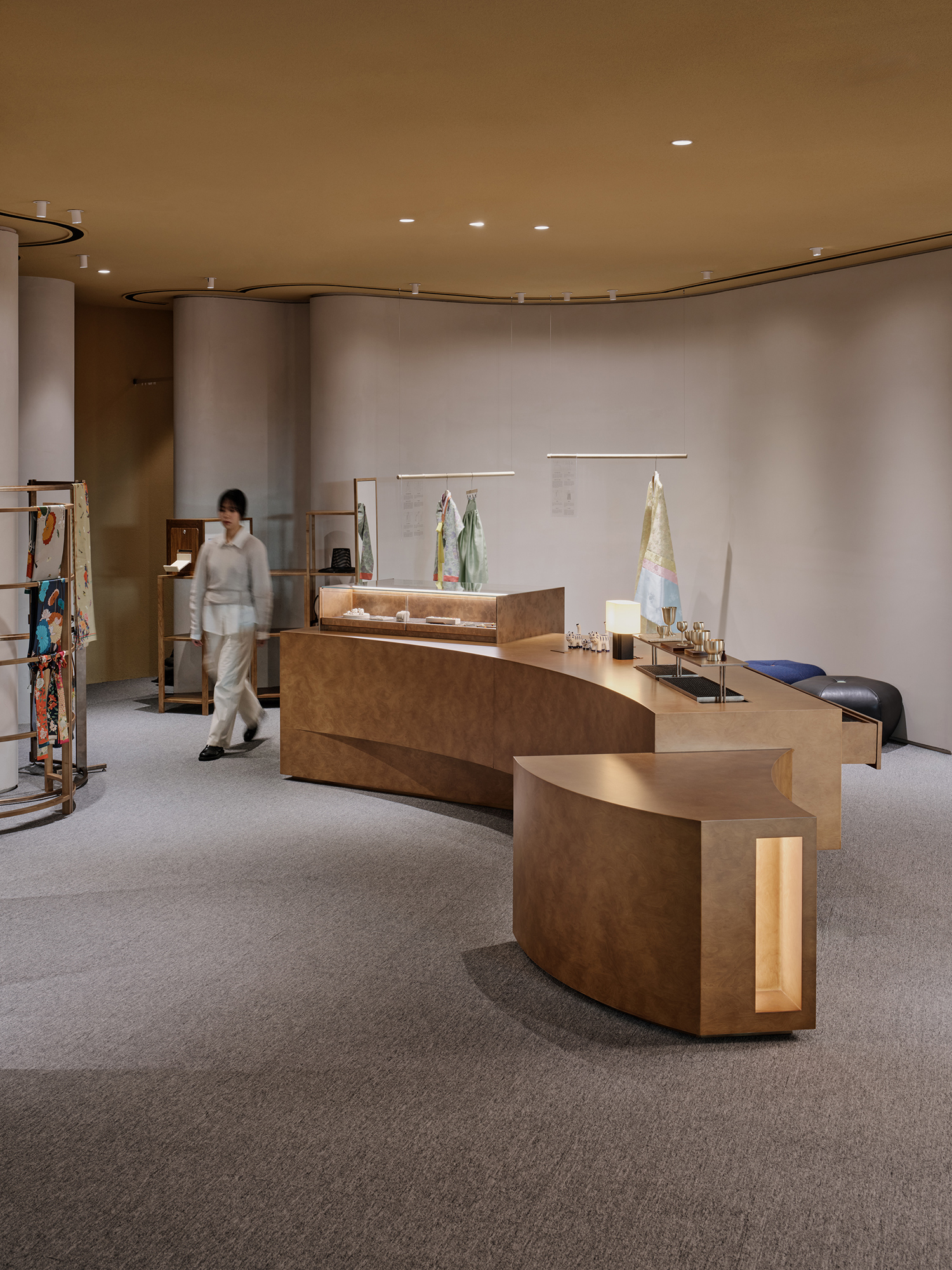
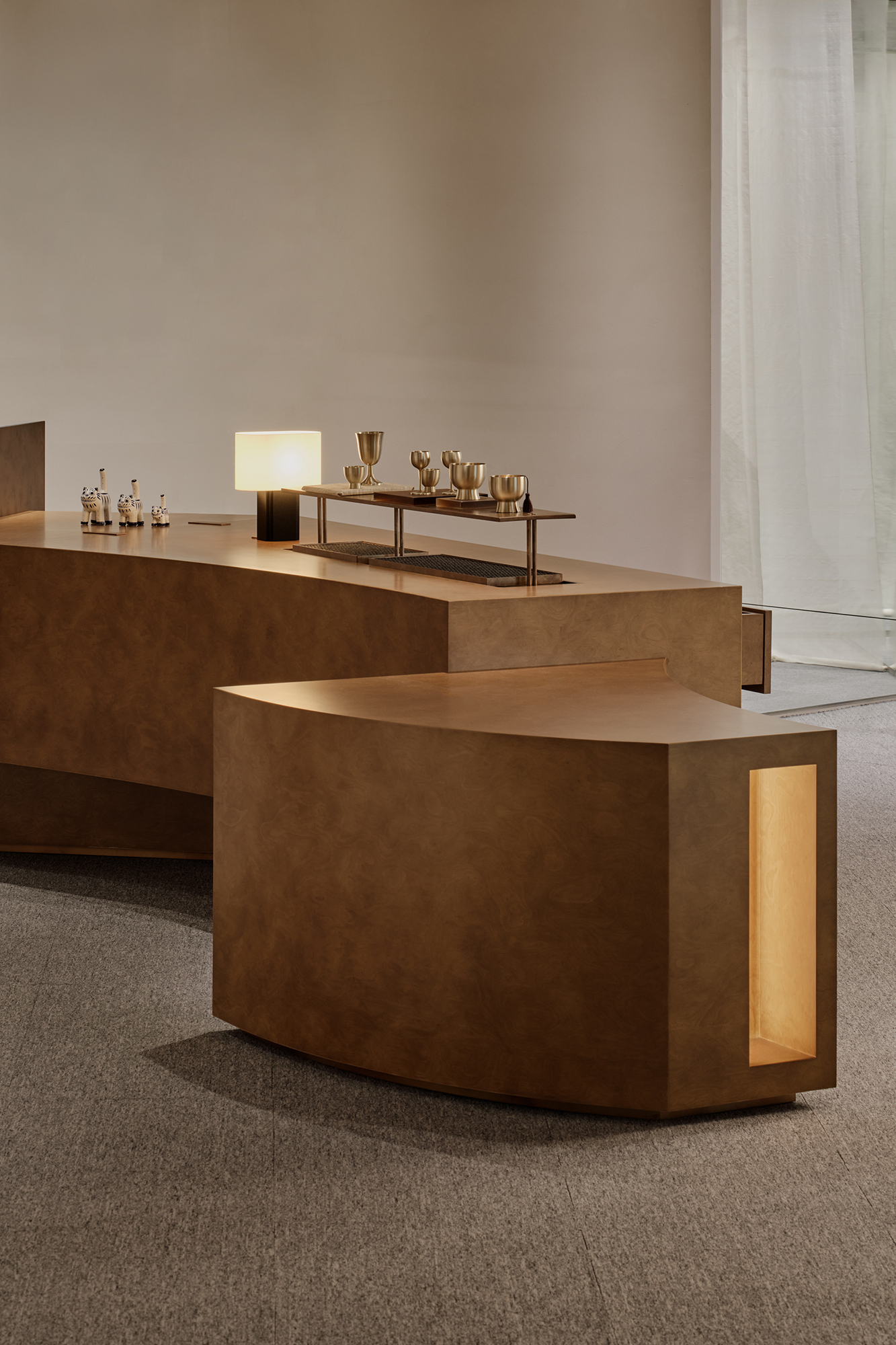
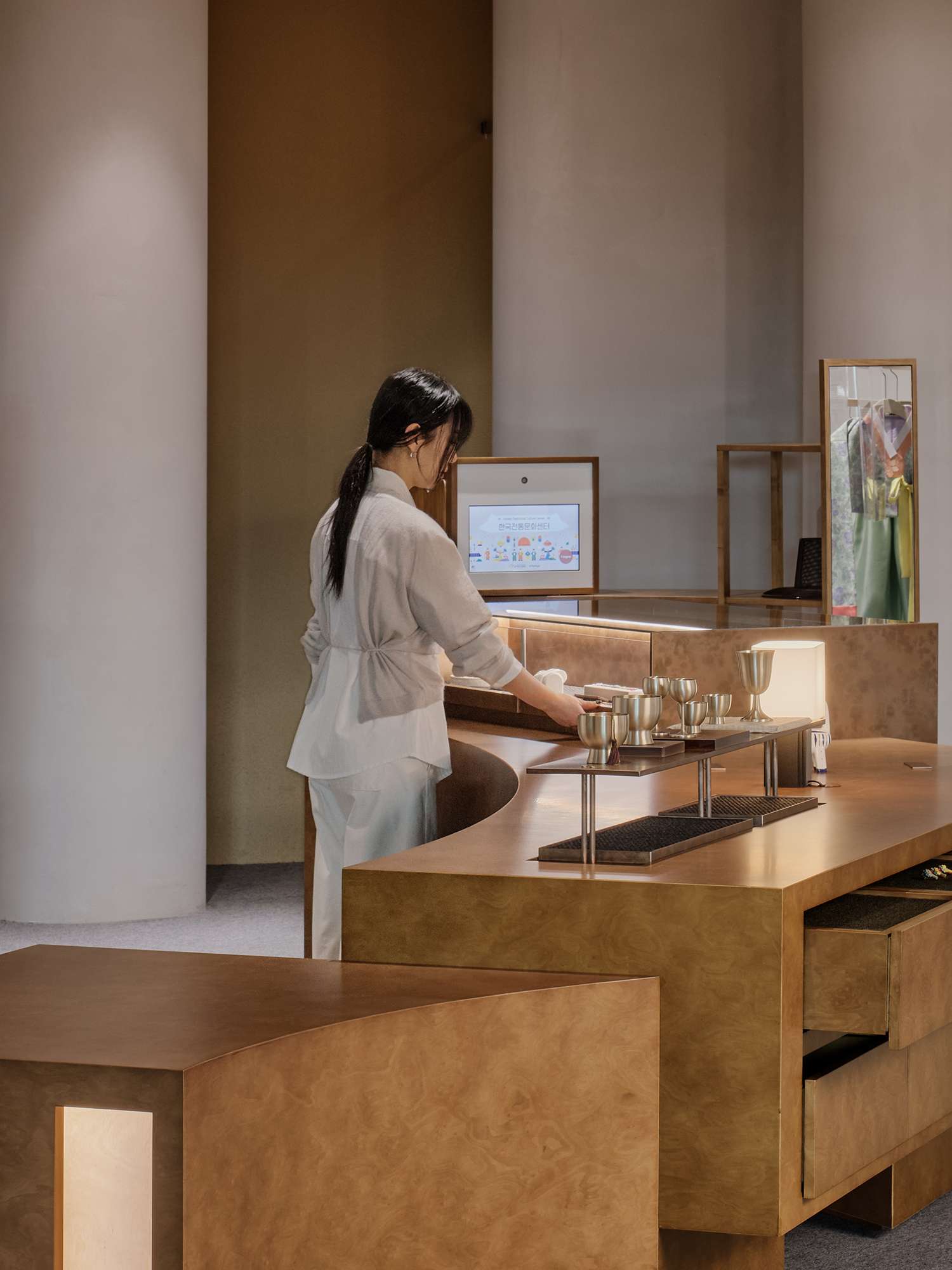
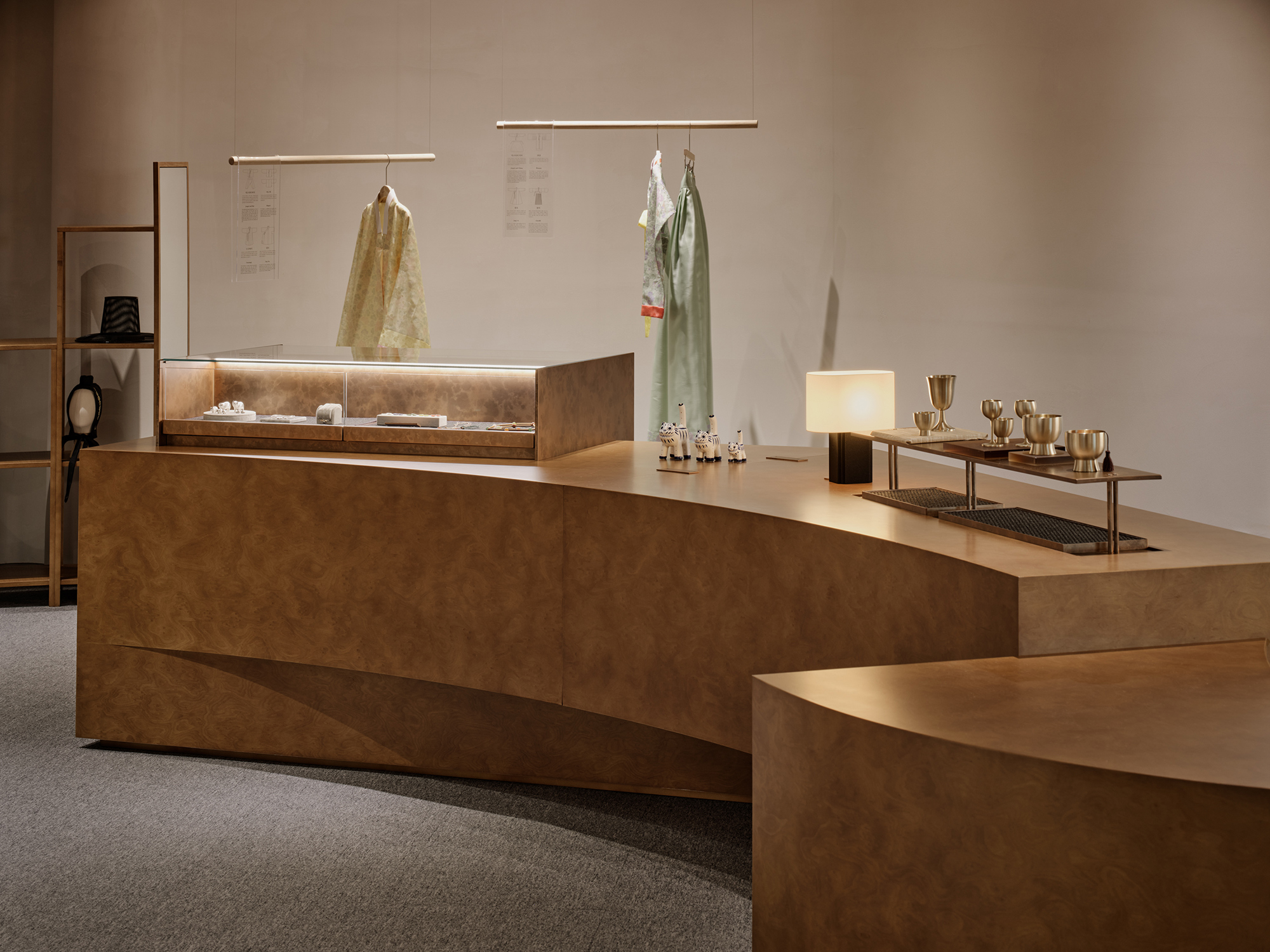
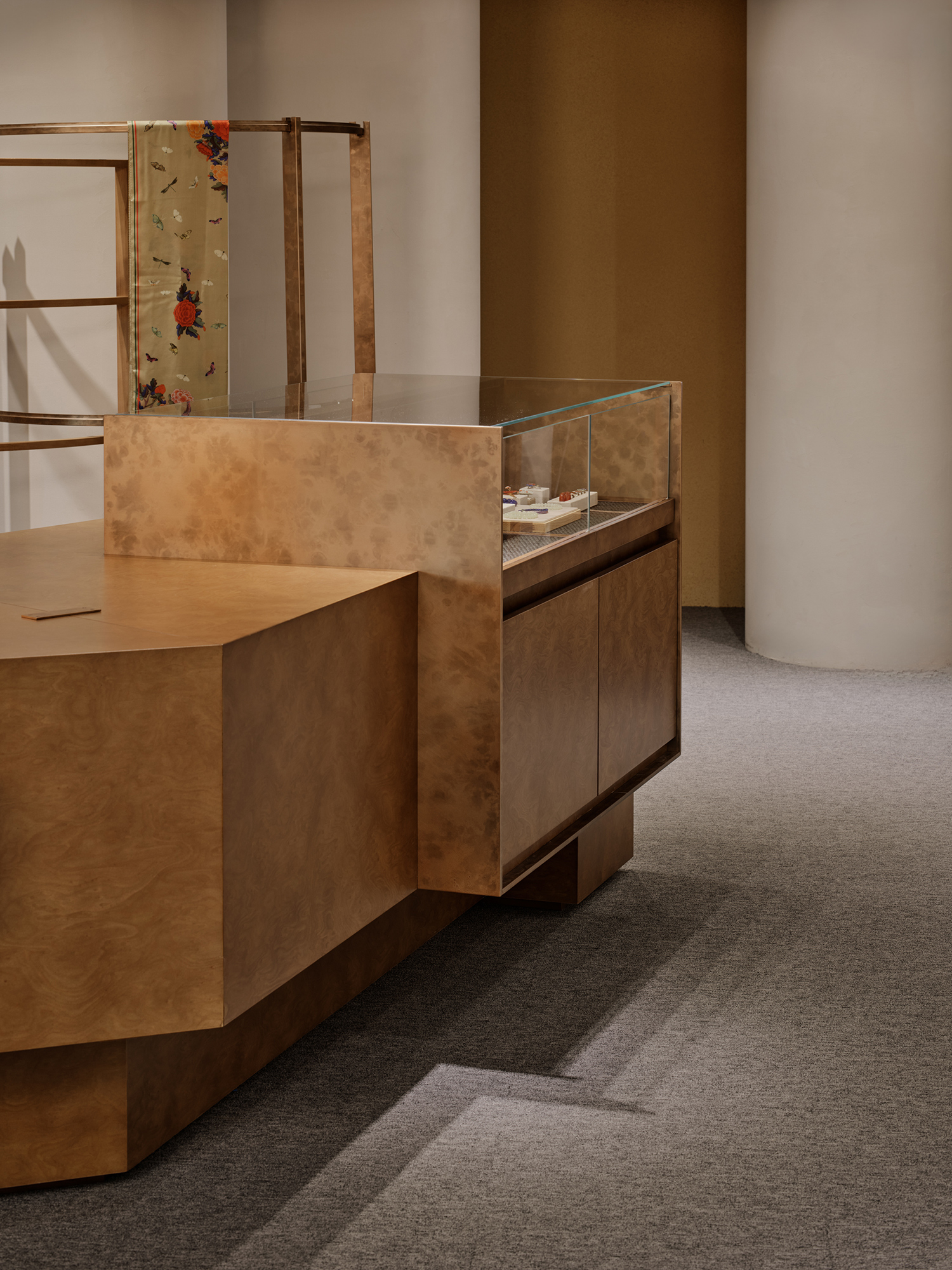
가구 전반에는 벌 패턴의 무늬목을 사용해 직선과 곡선의 흐름을 하나의 표면 위에서 자연스럽게 이어지게 했고, 여기에 발색 스테인리스 스틸을 더해 공간의 밀도를 조절하며 시각적 무게를 균형 있게 배분했다. 이 재료들은 단지 외형을 꾸미는 요소가 아니라, 한국적인 곡선을 오늘의 환경 속에서 어떻게 현대적으로 번역할 수 있는지에 대한 답변으로 작동한다. 각 요소는 제 역할을 수행하면서도 연결된 표면처럼 이어져, 다양한 카테고리의 제품이 놓여도 전체 풍경이 흐트러지지 않는 하나의 장면을 완성한다.
Across the furnishings, beehive-pattern veneer was used to connect linear and curved flows across a single surface, while color stainless steel helps balance visual density and adjust the overall weight of the space. These materials are not merely decorative choices; they offer a contemporary interpretation of what Korean curvature can mean today. Each element fulfills its purpose while connecting seamlessly with the next, forming a cohesive scene that remains consistent even as different categories of products are displayed.
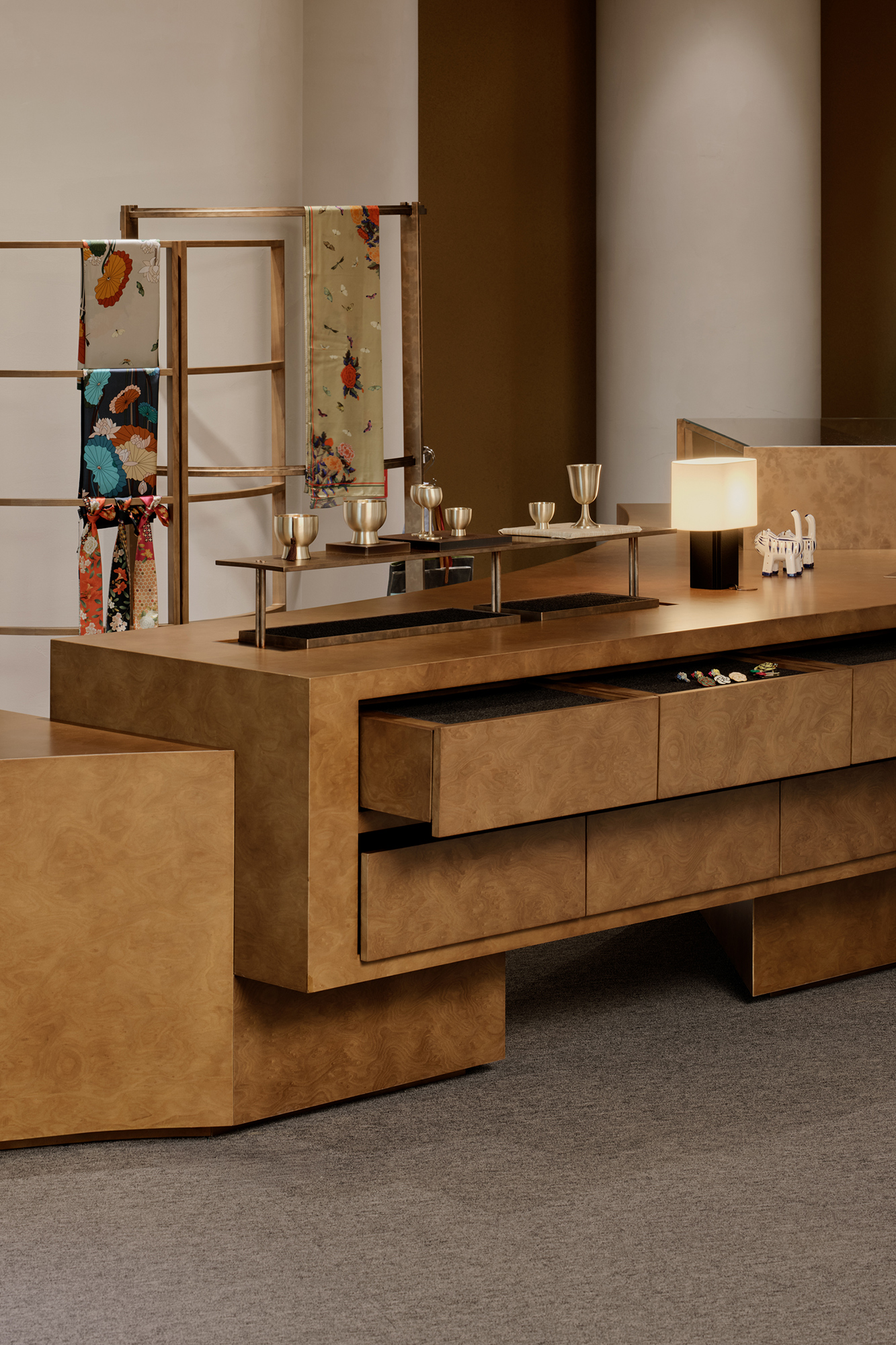
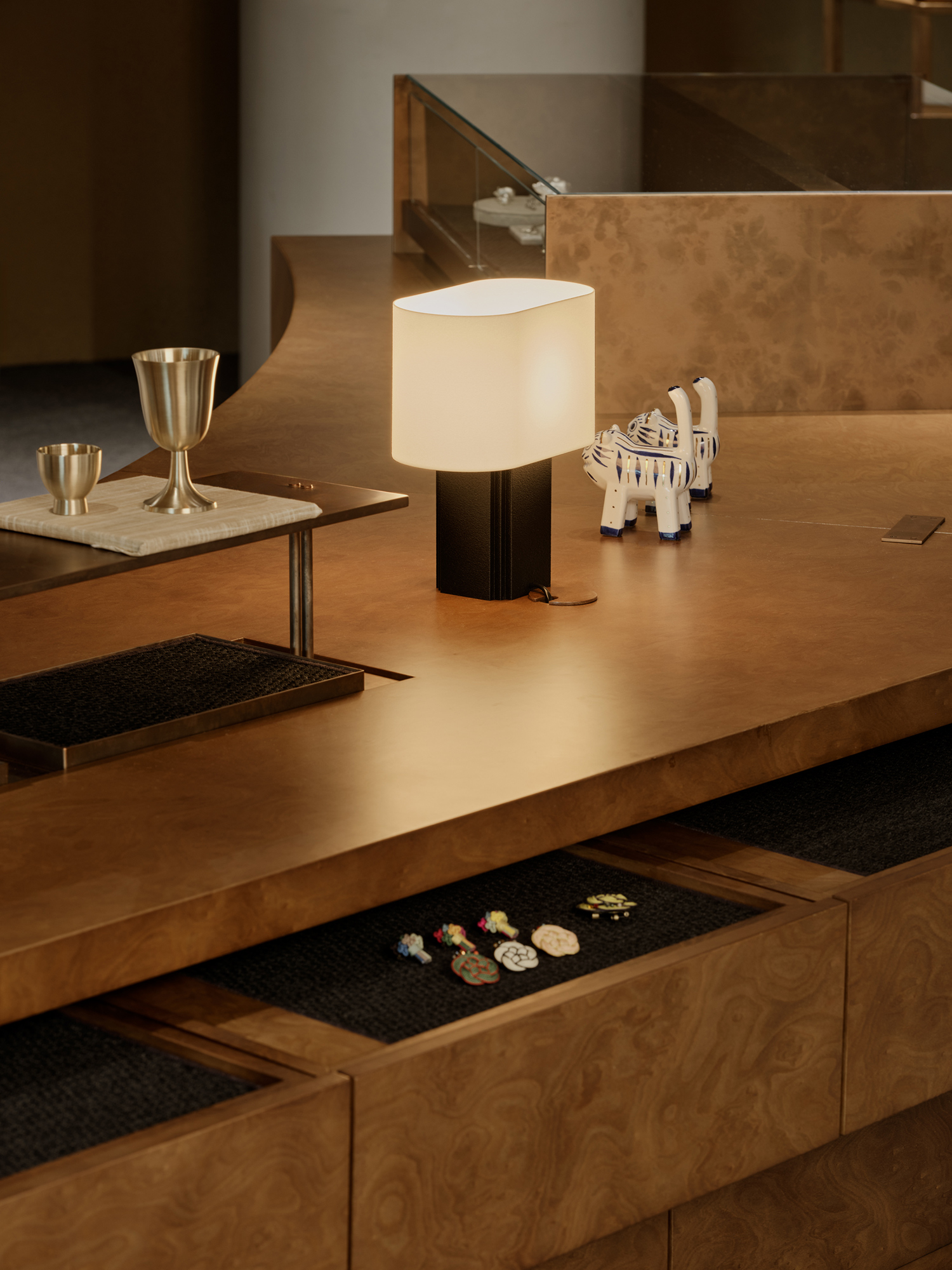
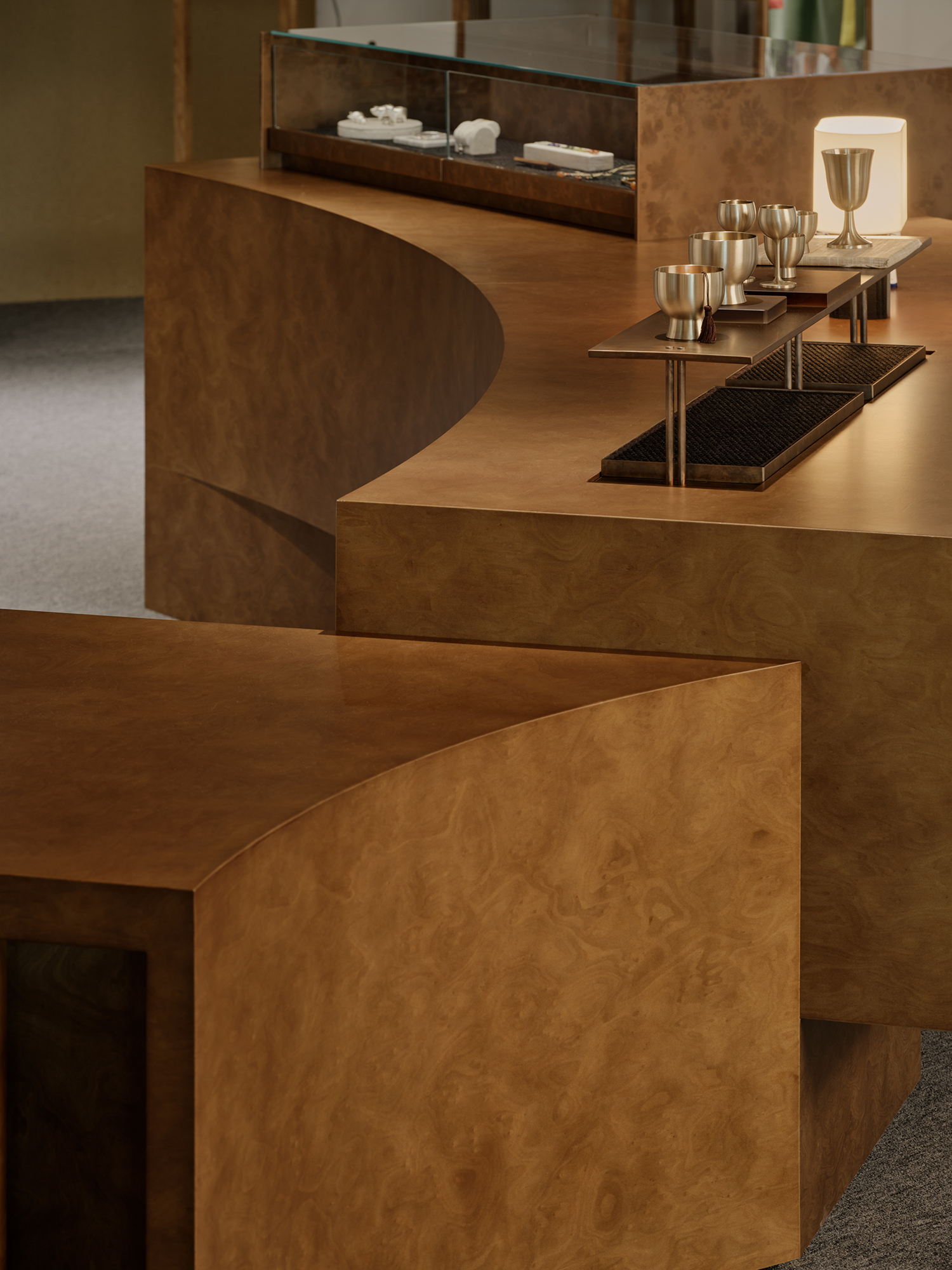
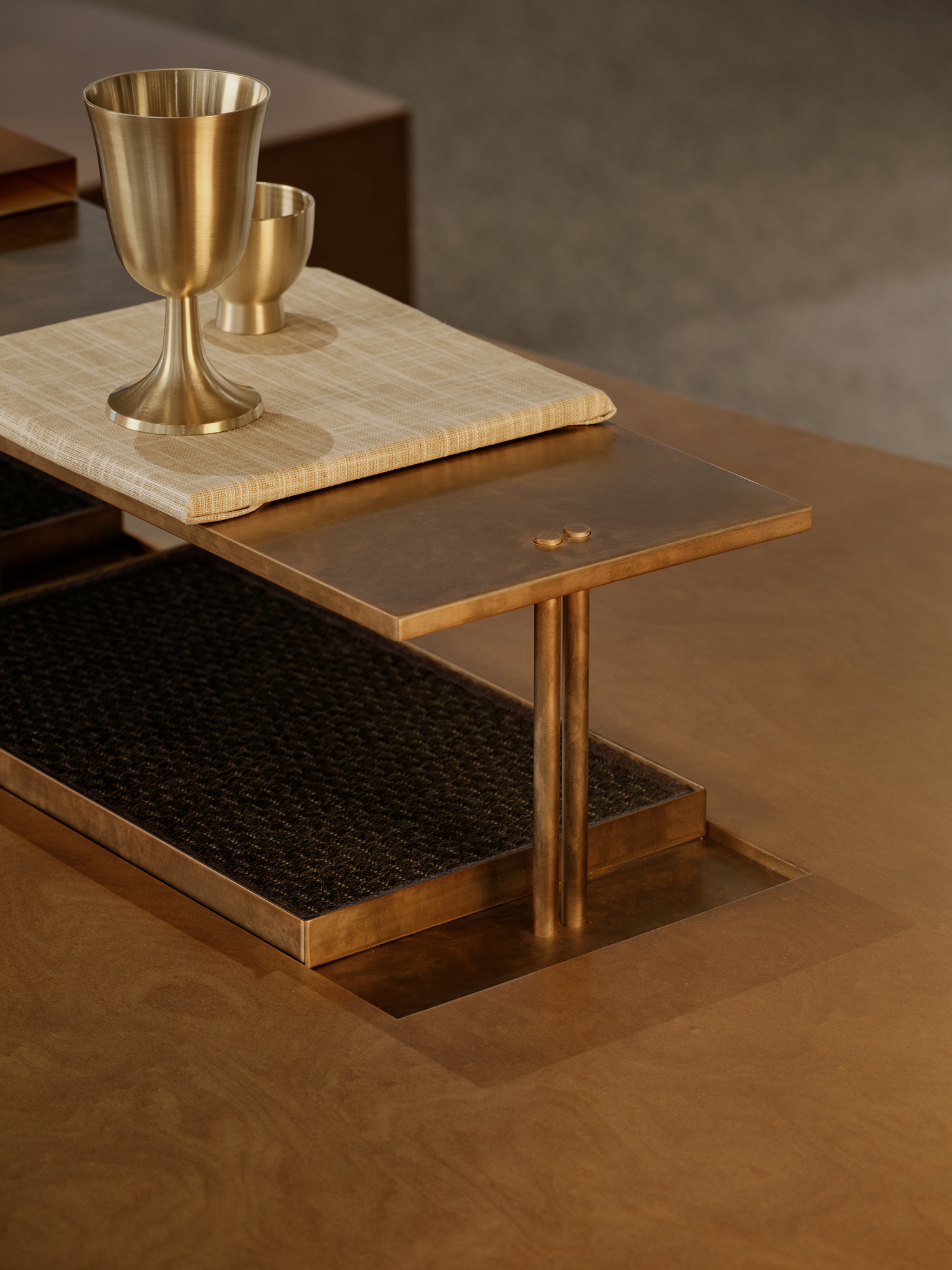
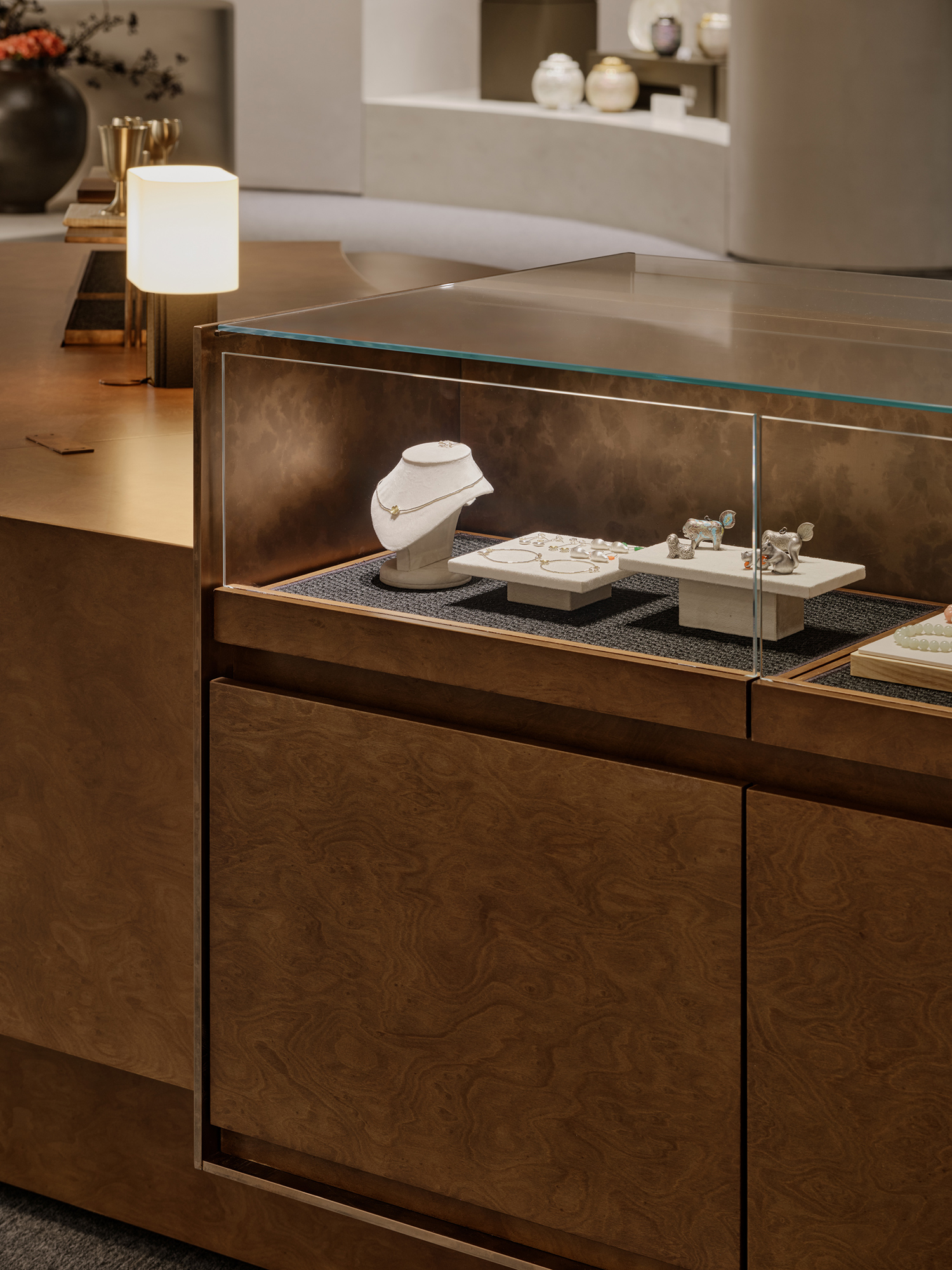
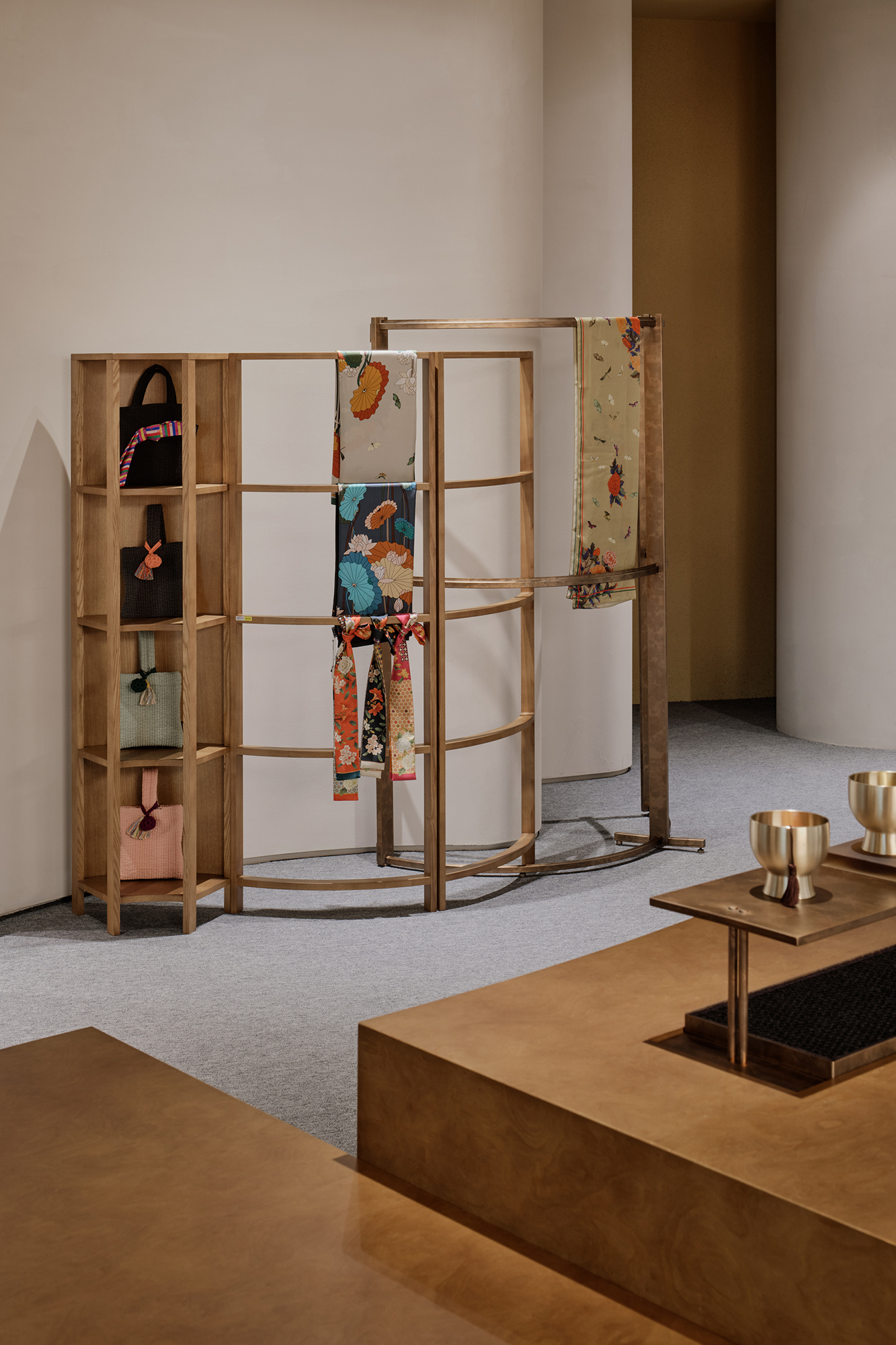
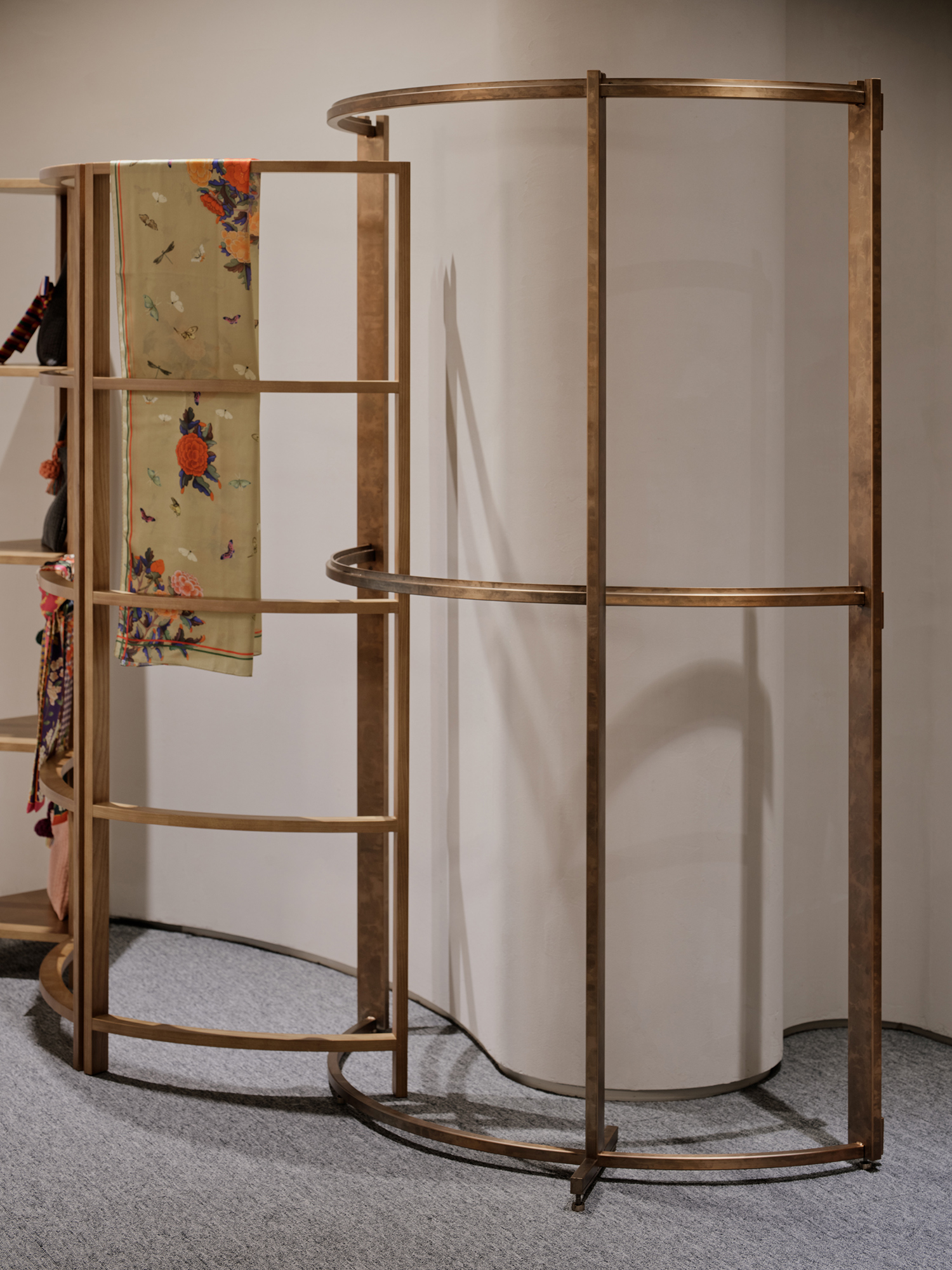
이러한 태도는 주변 집기에도 동일하게 적용되었다. 전시와 체험이라는 두 기능을 수행해야 하는 가구는 얕은 곡선을 통해 사용자의 행동과 시선이 자연스럽게 이어지도록 구성했다. 또한 벽 고정이 불가능한 행거에는 미세한 곡률을 부여해 하중을 분산시키고 스스로 균형을 잡으며 설 수 있도록 조정했다. 이는 곡선이 단순한 조형 요소를 넘어, 이동과 머무름이 만들어내는 관계의 패턴을 구조적으로 드러내는 장치가 되도록 하기 위함이다.
이 공간이 저마다의 속도로 머물고 지나가는 이들에게 한국적 미감의 깊이를 다시 생각하게 하는 한 장면이 되고, 여행의 여정 속에서 자연스럽게 한국 문화의 결을 발견하는 계기가 되기를 바란다.
Across the furnishings, beehive-pattern veneer was used to connect linear and curved flows across a single surface, while color stainless steel helps balance visual density and adjust the overall weight of the space. These materials are not merely decorative choices; they offer a contemporary interpretation of what Korean curvature can mean today. Each element fulfills its purpose while connecting seamlessly with the next, forming a cohesive scene that remains consistent even as different categories of products are displayed.
We hope this space becomes a quiet yet memorable moment for those who pause or pass through—an opportunity to reflect on the depth of Korean aesthetics and to encounter the subtle texture of Korean culture along their journey.